
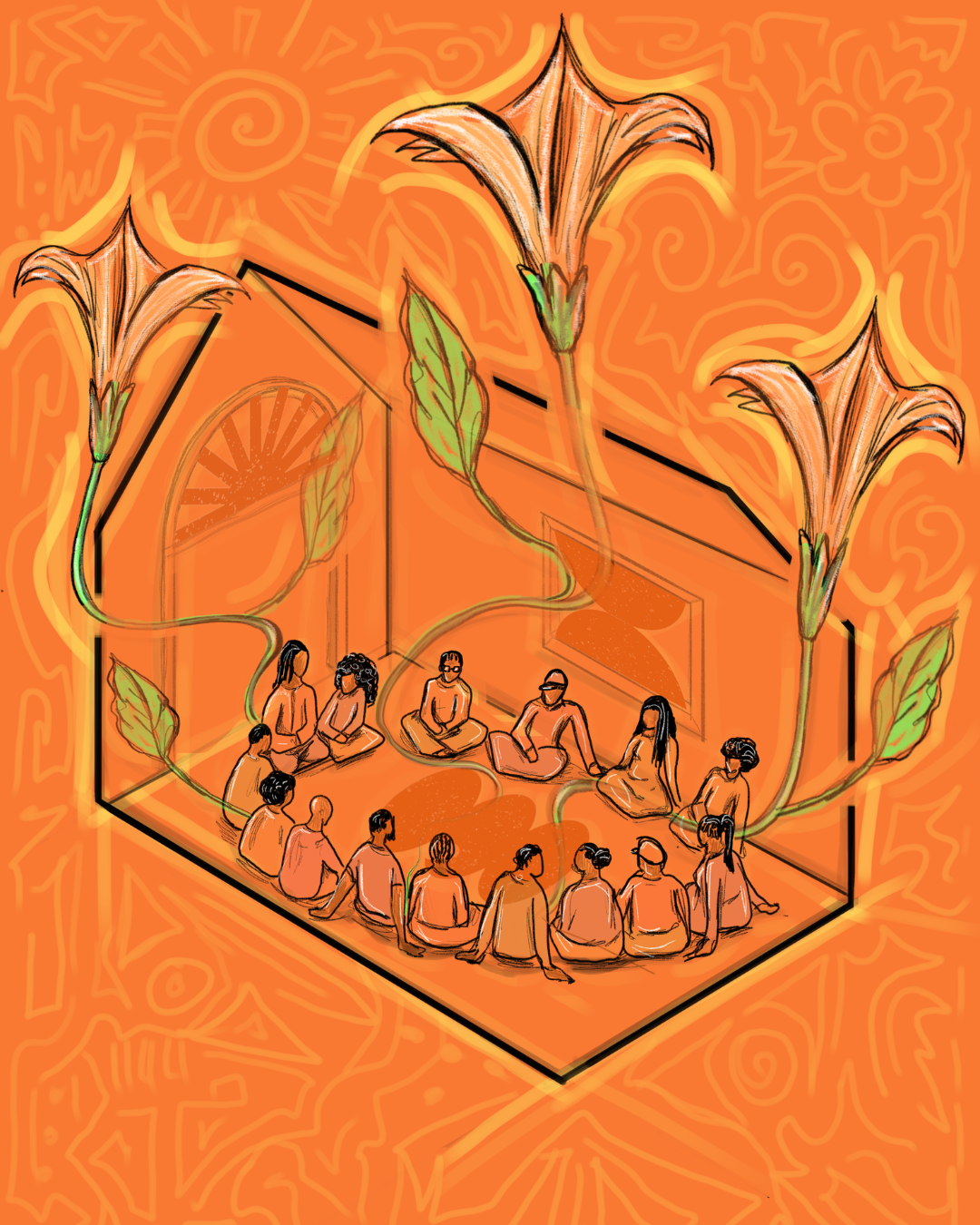
Illustration by Tireni Adeniji
The Room that Shapes Us: Design as a Liberation Practice
A response to the 2026 Kinfolk Network Annual Convening, written by Tireni Adeniji
Audre Lorde wrote that "Caring for myself is not self-indulgence, it is self-preservation," (Lorde, 1988, p. 131) and then named that care as an act of political warfare. The same Lorde taught us that the master's tools will never dismantle the master's house (Lorde, 1984). I have spent a long time sitting between those two sentences, and I have come to believe they are one idea. If the house was built to wear us out, care is the first thing we carry out of it and the first stone of what we build next.
So let me begin with a question. Have you ever walked into a room and been filled with the spirit of Black liberation? Black voices, Black laughter and Black thinking, rising until the walls seem to soften, until you can feel the space itself leaning in to listen. The sounds of Blackness shaping and forming the room, and those vibrations building new rooms inside, but also beyond, the room we were given.
That is what was felt at the Kinfolk Network Annual Convening in Manchester on 3rd and 4th of October 2026. It was a space that cultivated design literacy as a form of Black liberation, and I want to tell you what I mean by that, and how KIN did it.
What space does
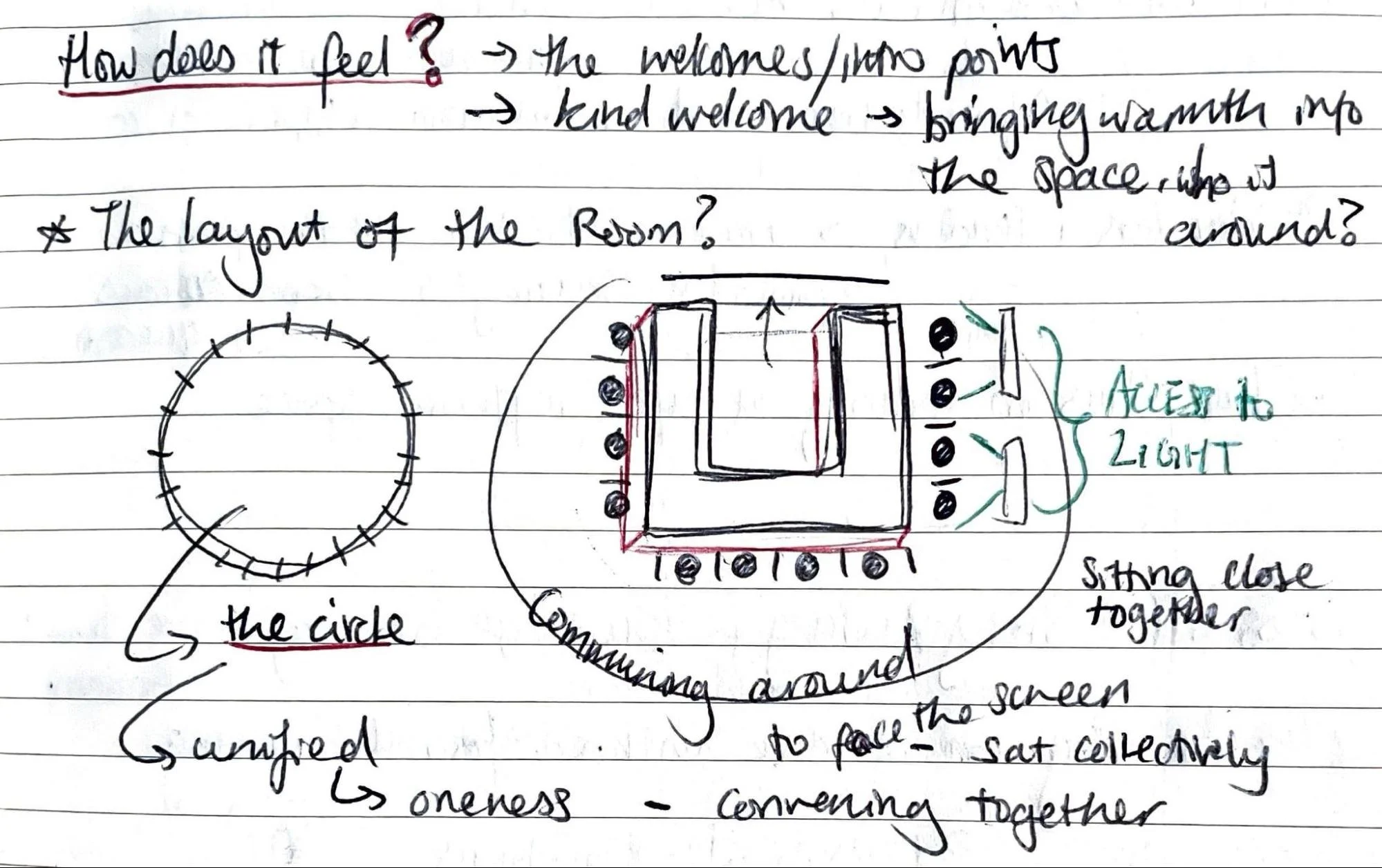
Space is never neutral. Every room holds decisions about who sits where, who faces whom, who can reach the light, who is allowed to rest and who must perform. Activist organising that ignores spatial design risks rebuilding the very structures it is trying to dismantle, because the rented hall and the borrowed seminar room teach their own hierarchies of knowledge and authority long before anyone speaks. Design literacy is the practice of learning to read those decisions, and then daring to make different ones. It asks about the architecture of spaces and the architecture of the human, and it refuses to pull the two apart, because knowledge is embodied within the individual and knowledge is also architecture. It asks what intention sits behind each arrangement of a room, what rhythm the room keeps, and whose voice it hands back to us when we speak. And it asks, above all, how Black liberation work is housed and formed.
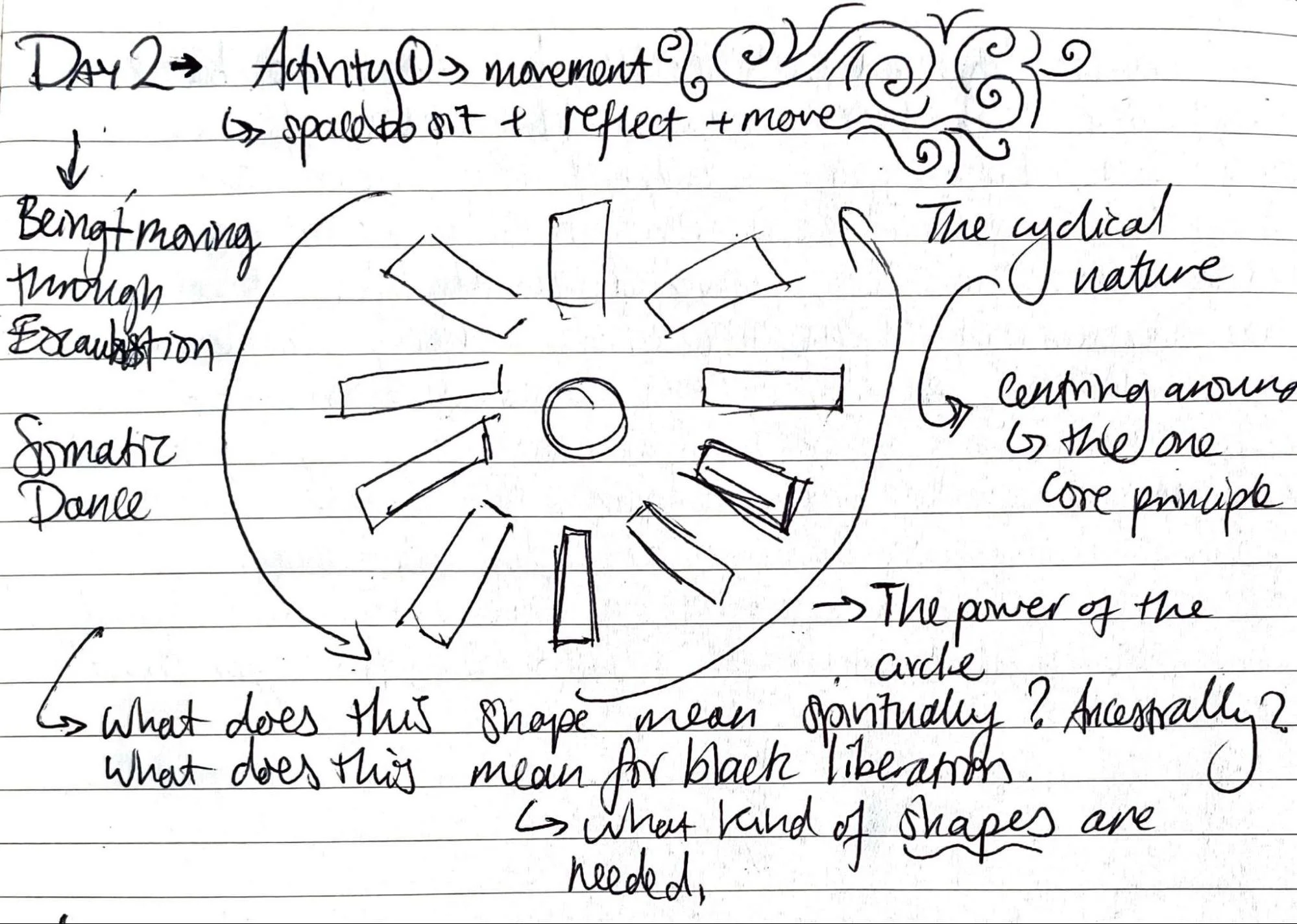
KIN answered that question in the way the weekend was built. We arrived to a welcome that carried warmth into the space before a single session had begun, and the hall received us the way a home receives people it has been expecting. The chairs were gathered into a U shape, close enough that our shoulders almost touched, all of us facing the same screen and the same light pouring in through the windows along the side. I thought of the circle, the oldest shape we have for gathering, which speaks of unity and oneness, and I felt that intention in the U: a way of convening that made nobody an audience. The days moved at a slow, intentional rhythm, with gentle transitions folded between sessions, a full hour for lunch, and a library and quiet room waiting for anyone who needed to be held by silence. The days breathed, and so we breathed with them.
I kept asking how a large hall reflects the identity of the people who occupy it, and what I found was that the conversations shape the space. The hall became Black space through who filled it and how freely our voices were allowed to move, and by taking up space together we took ownership of it, and made it our own.
Our space
Over the two days, the room turned into many rooms. In the archiving session, it became a living archive, with people understanding themselves as keepers of memory. The institution that usually decides what counts as a record, who may hold it and who must request access was not needed because the archive was already in the room, held in bodies and shared by speaking. In the session on collective care, it became a place to ask how we show up fully without burning ourselves out, and what we are feeding ourselves. We were asked to draw what kind of cup we were, and in answering we began to see what we hold, what we pour out and who refills us. Care stopped being something each of us carried alone and became something we tended together.
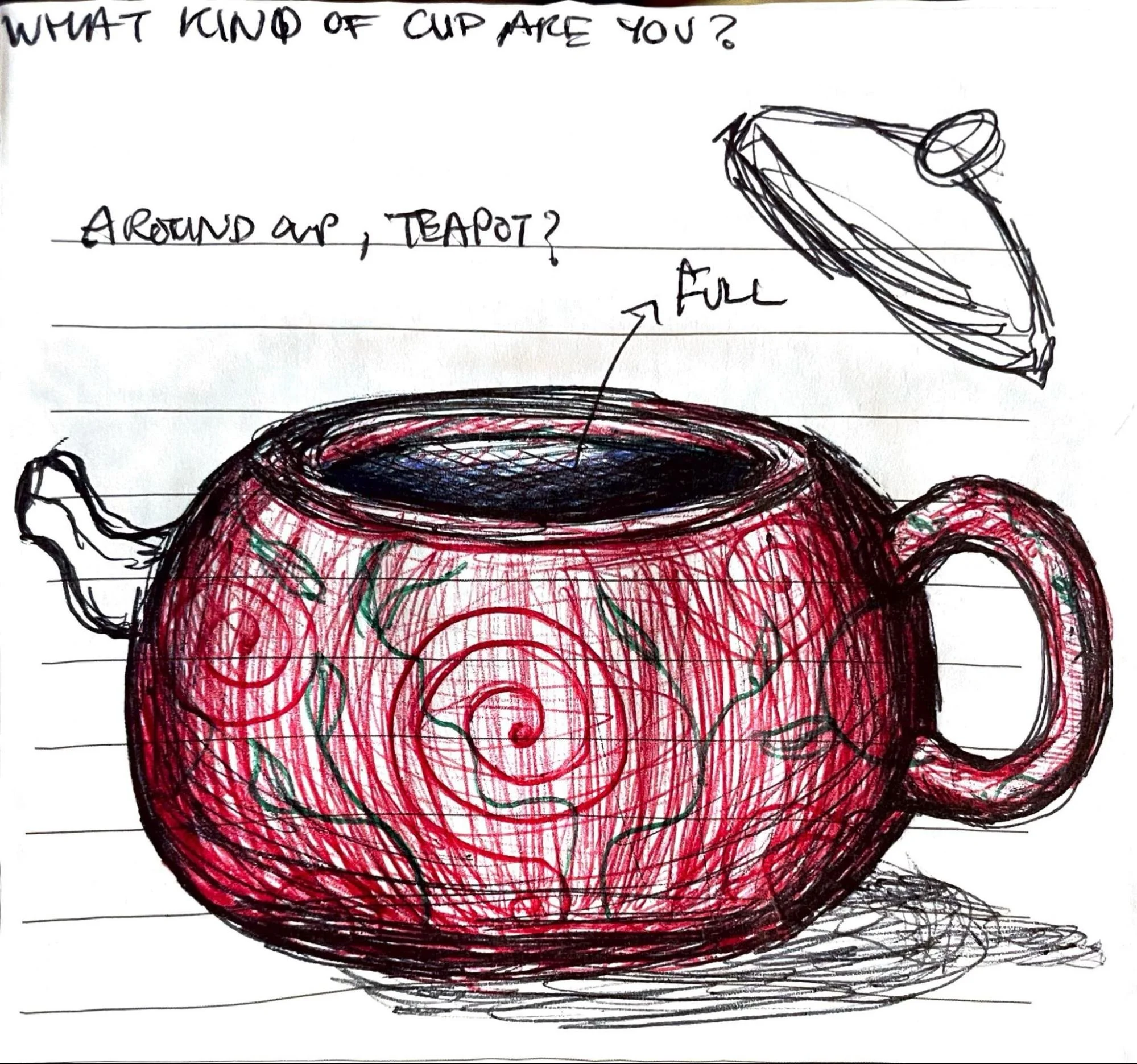
On the second day, when we were invited to lie down and listen to our exhaustion, the hall seemed to exhale. A clarity and peace and unity formed after that rest that no agenda could have scheduled. We were called to dance freely and organically, allowing our bodies to move without expectation. This was a form of catharsis, a release of tension and exhaustion and a connection to the uncaged self. In the leadership incubator, the space became a place of listening, where each person was given five uninterrupted minutes to speak about a poem on revolution. It felt foreign at first. I am used to conversation as back and forth, a rally of interjections and half-finished sentences, and here there was only the room and the clock to fill. With nothing to answer other than my own questions that had arisen during the reading, my thoughts had space to snowball, gathering weight and reaching places a quicker exchange would never have let them go. Listening to others felt like the same discipline in reverse, a patient holding of someone else’s space. Liberation pedagogy revealed itself as the act of listening. Time moved differently in these rooms. The clock was still there, but it did not rule us. Clock time, the measure that sorted bodies into shifts and productive hours, loosened its grip, and in its place we kept the time of the breath, of the story that takes as long as it takes, of the silence someone needed before they could speak. The weekend did not feel short or long. It felt held. We were reminded that moving at the pace of care is a refusal of the pace of capitalism; that knowledge hoarding is power hoarding.
This is why Black-centred spatial design matters so much within liberation movement work. We need our own spaces to convene and strategise, and just as much to rest. So often we are guests in rooms built around someone else's comfort and someone else's clock, spending our energy adapting to walls that were never shaped with us in mind. bell hooks understood this when she wrote of homeplace as a site of resistance , a place where Black people could return to themselves and be restored (hooks, 1990, pp. 41–-49).I felt that lineage sitting beside me on those chairs.
Forming our own tools
This is where Lorde's two sentences meet. If the master's tools cannot dismantle the master's house, then we need tools of our own making, and I came to see KIN as exactly that: a new tool. The convening is a tool, as surely as a hammer or a drum is a tool. The U of chairs, the gentle transitions, the quiet room, the music, the permission to stop and the insistence on gathering in person were each carefully made, and together they did what the master's house has never been able to do, which is to hold Black people without asking us to shrink. This is the premise at the root of my writing on leaving the master's house. We do not renovate the structures that were built against us. We leave them, and we build otherwise, and we learn to build by gathering and centring collective care, this is the act of political warfare Lorde spoke of.
It is also how I try to work. My practice moves between architecture, writing, poetry, painting and community organising, and the thread through all of it is The A.K.A.N.I Toolkit (Ancestral Knowledge + Arts Narratives Integration). A.K.A.N.I is a decolonial design education toolkit, assembled from ancestral knowledge and offered to communities as something to pick up, adapt and carry into their own rooms, so that spatial literacy does not stay locked inside the institutions that taught me.
It is built around three pillars; Practicing Ongoing Reflection asks us to reflect on who we are and how we see.
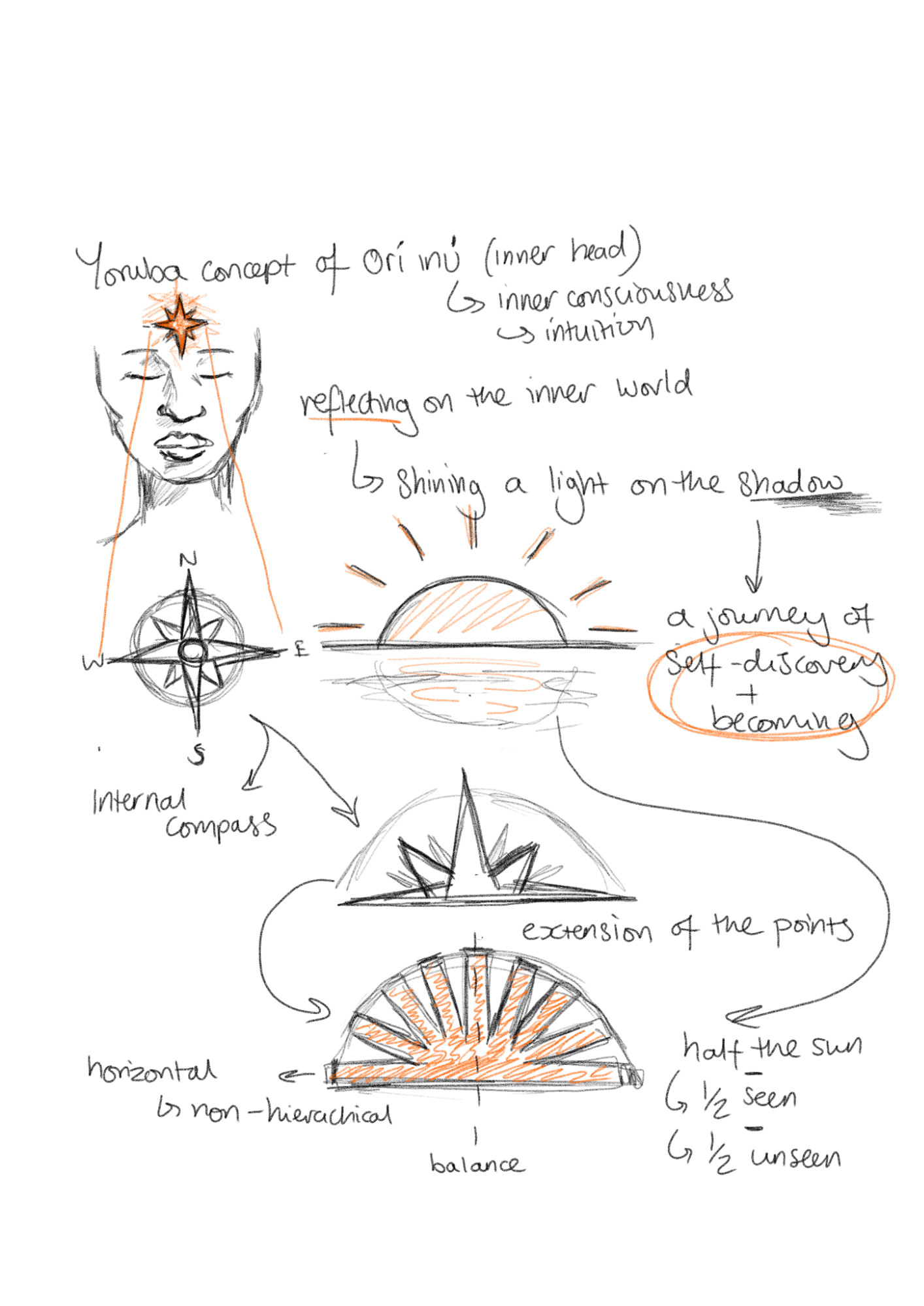
Reclaiming Ways Of Knowing reassesses whose knowledge is heard and learned from.
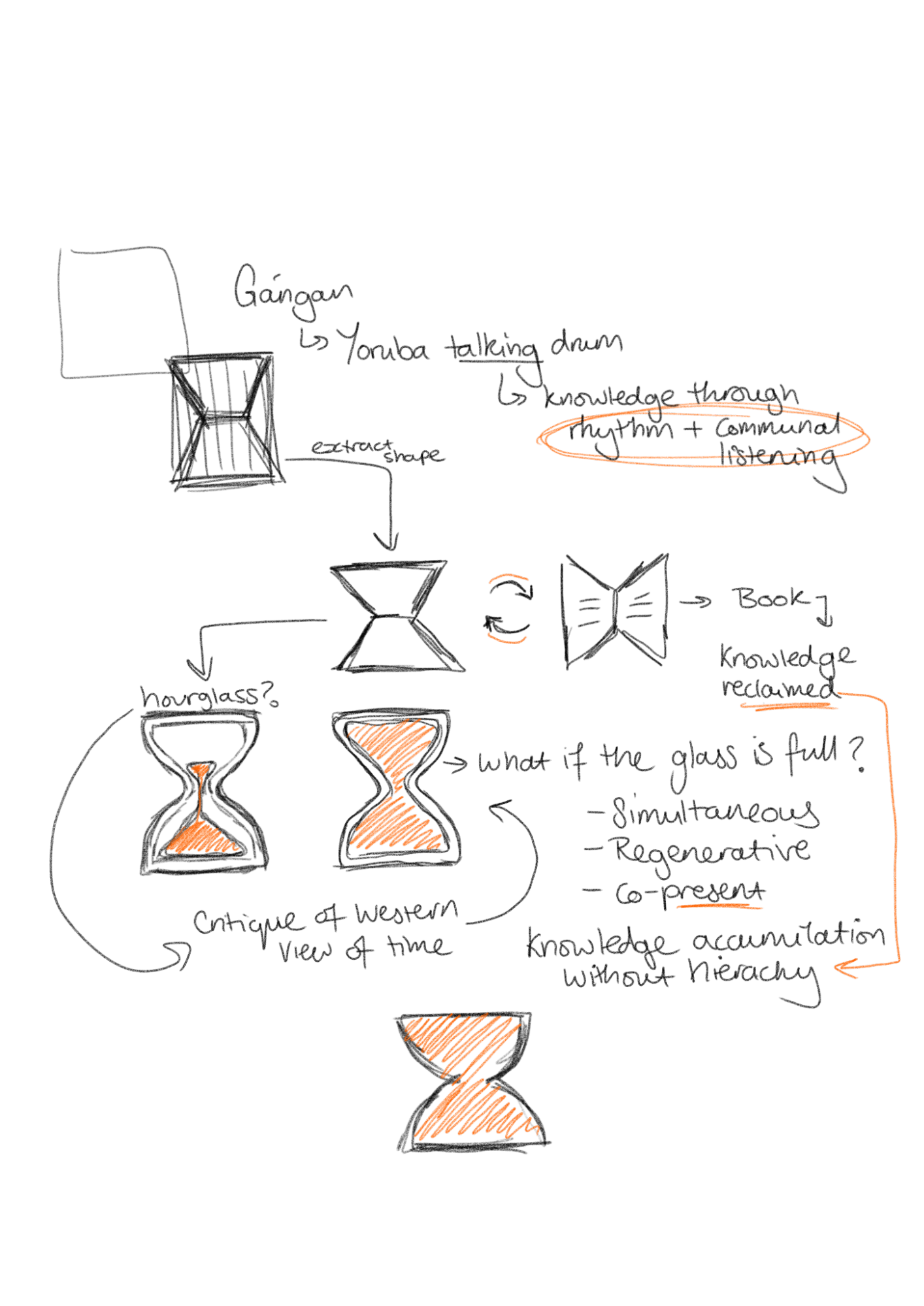
Embodied Materiality attends to a deeper relationship with the earth, the knowledge held in bodies and in the matter around them.
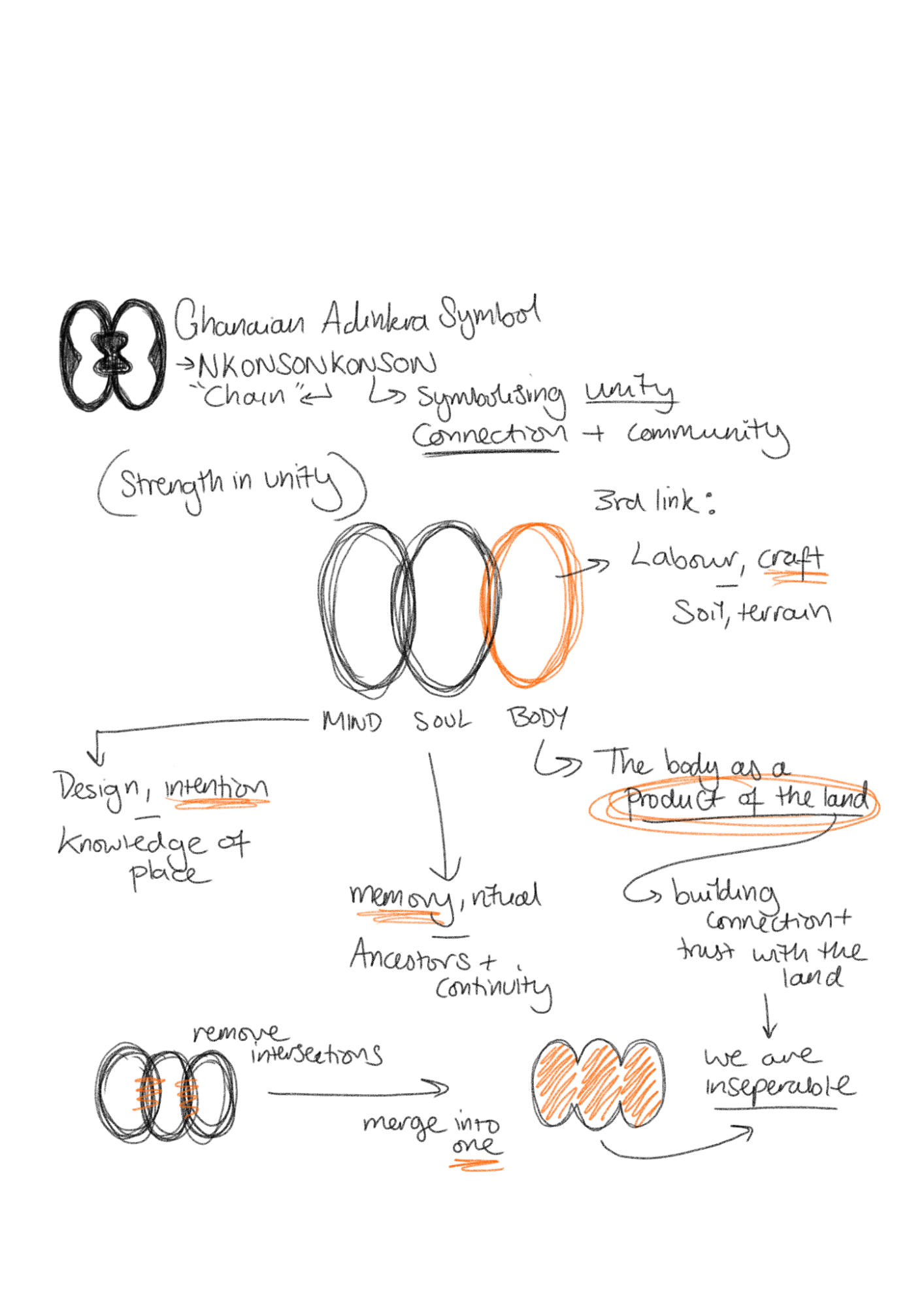
They come alive in workshops, from creative activities to thinking about home with our hands, to building worlds from collage and conversation, and in a board game, A Game of Spatial Dialogues, that turns these questions into play.
Watching KIN do this in a hall in Manchester felt like watching a sister tool at work. Both begin from the same conviction, that the way we make our spaces is itself a form of liberation, and that the tools have to be made by us.
Ancestral knowledge in the room
Beneath all of this runs a deeper current, and it is what the room was truly made from. Marimba Ani writes that people carry their ancestors forward in how they gather, how they worship and how they understand the world, and she insists that African spiritual continuity survives the diaspora because it lives in practice (Ani, 1994). I felt that on both days. The knowledge embedded in those practices was reignited in us, and it mattered that the session was curated by Black people only, because so many of the practices we do, and have done ancestrally, have been taken and gentrified. To rest, move and sing in a room held by our own was an act of reclaiming.
This is where the three pillars of the Toolkit walked through the hall. The practice of ongoing reflection was there in every wander and tender, each moment we turned to a partner and asked a curious question and let the answer take its time to unfold. The practice of reclaiming our ways of knowing was there in the archive, in the songs that surfaced unprompted, in the ancestral practices returned to us. Embodied materiality, knowledge held in bodies and in the matter around them, and it was there in the way our bodies, our voices and the arrangement of the room held one another up.
I kept asking how our heritage spiritually fills a space, and what I came to is this: our words, voices, conversations, thoughts and imaginations, collective building and dreaming, the forming of action, and the slow process of growing together. The vibration and frequency of the Black mind, the spirit, the vision, the voice, the song and the soul are activated by being in the collective.
The spirit of the room
Multiple rooms were shaped in that hall on both days, created by our voices and spirits during each session. Spiritually, our room expanded beyond the walls of the hall, and the songs our hearts sang shone out of the windows, calling outward and onward, spanning wider than the capacity of the space. We moved more than physically in the movement session. Our spirits danced. We called on the spirit of care, healing and love through our conversations about grief and cracking, and our conversations about archiving summoned the ancestors, our pasts and our memories. All of it shaped the room differently, yet collectively and consistently we were holding the Black soul, the liberation song, the spirit of our activism, and that spirit shaped the room as we shaped it. I hold that spirit in my heart as I write this, the calm, powerful, loving spirit that filled me through every interaction, every smile exchanged, every voice heard, and every conversation had.
The Room that Shapes Us
In creating the space for the convening across the two days, KIN shaped a room that allowed for their work to travel in different ways. Resources moved through the hall the way water moves through soil. The Kinfolk Solidarity Toolkit was there to take, alongside the information shared by participants on the day, offered as tools to carry back into our own spaces. At the close, we were asked to support our new kin, which is to say that the care practised inside the room had to become material support outside it: through backing Black political economy education, funding Black feminist work, and showing up for Black and Pan-Africanist events, which gave the energy of the weekend has somewhere to land. Liberation is not only a feeling in a room. It is a web of relationships and resources that keeps holding us when the doors have closed.
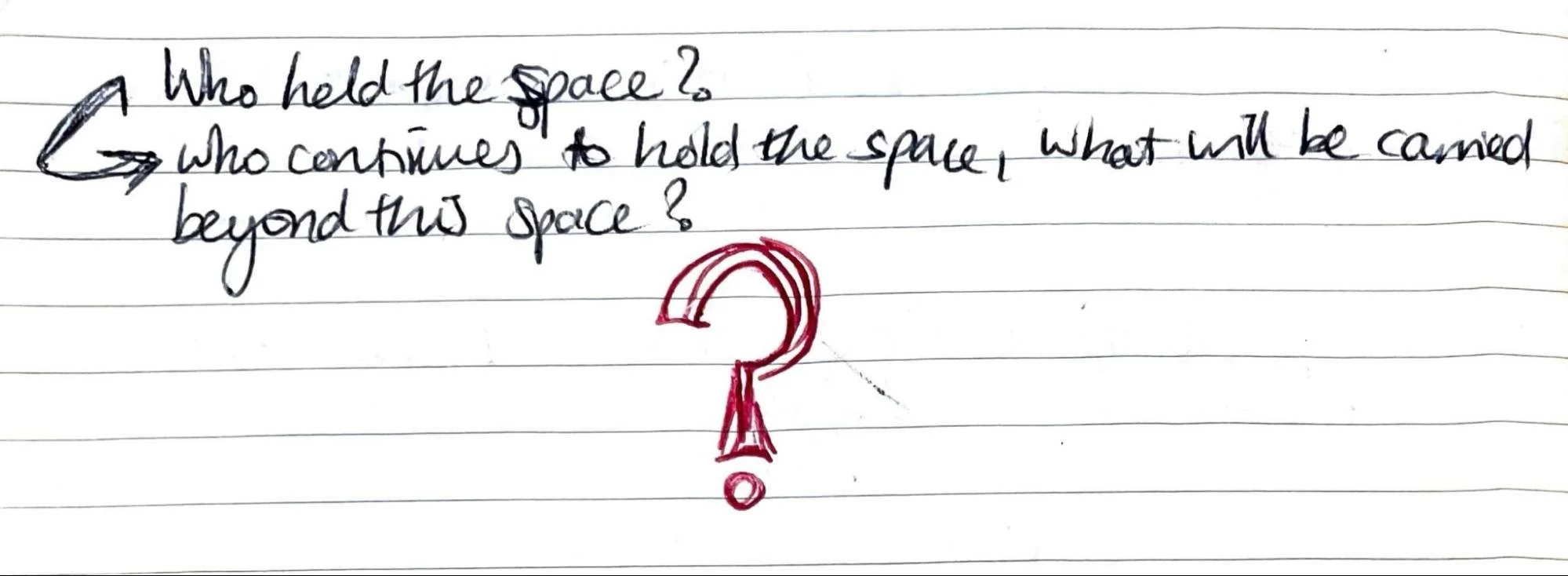
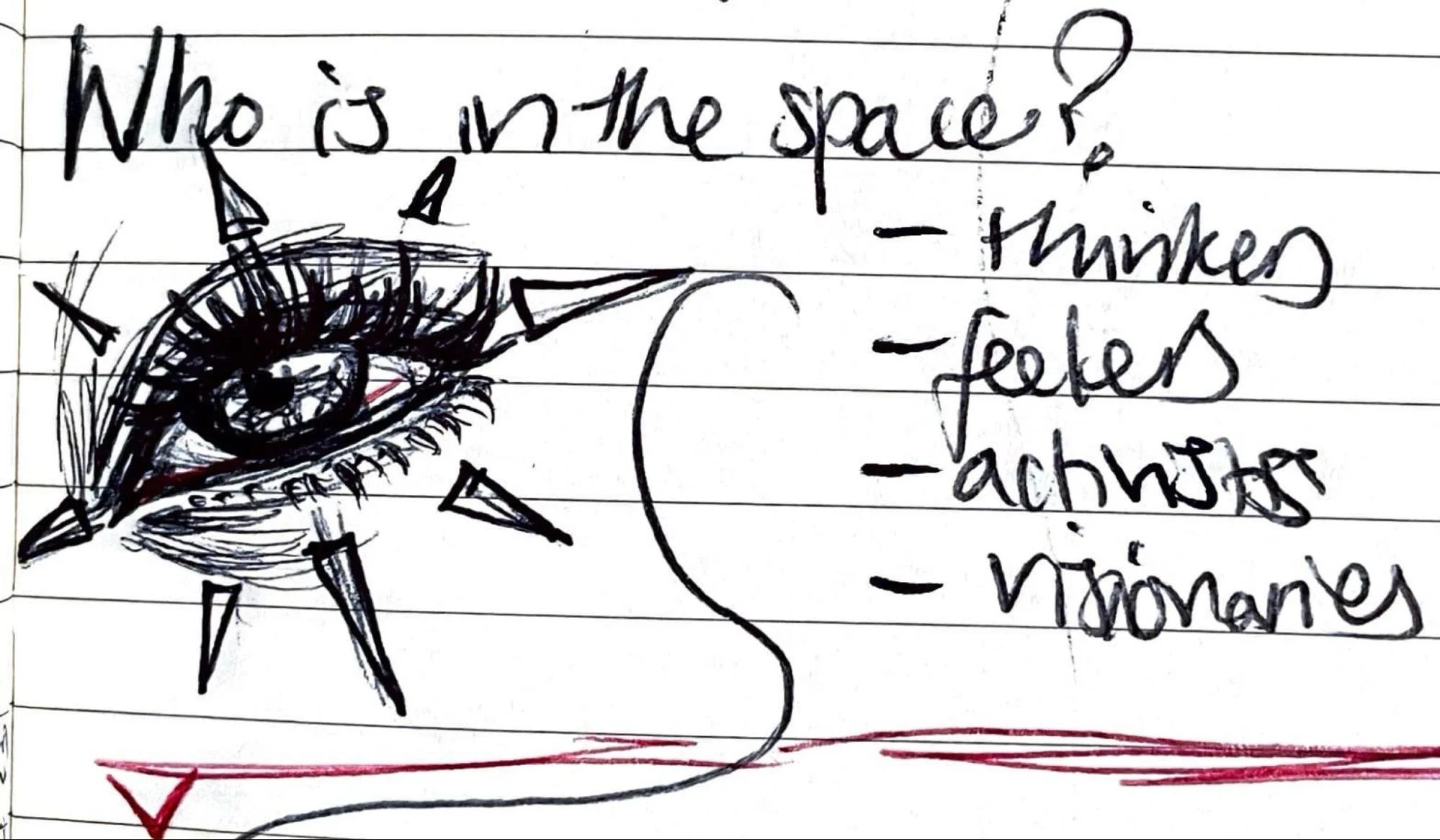
Which leaves the questions I wrote at the bottom of my page. Who held this space, and who continues to hold it? What will be carried beyond it?
The room that shapes us is built by us, and it will continue to evolve and bloom.
References:
hooks, b. (1990) ‘Homeplace: A Site of Resistance’, in Yearning: Race, Gender, and Cultural Politics. Boston: South End Press.
Lorde, A. (1988) A Burst of Light: Essays. Ithaca, NY: Firebrand Books.
Lorde, A. (1984) ‘The Master’s Tools Will Never Dismantle the Master’s House’, in Sister Outsider: Essays and Speeches. Berkeley: Crossing Press.
Ani, M. (1994) Yurugu: An African-Centered Critique of European Cultural Thought and Behavior. Trenton, NJ: Africa World Press.
Smith, M. M. (1997) Mastered by the Clock: Time, Slavery, and Freedom in the American South. University of North Carolina Press
Mbiti, J. S. (1969) African Religions and Philosophy. Heinemann.
Recommended Resources:
Toolkits
Adeniji, T. The A.K.A.N.I Toolkit (Ancestral Knowledge + Arts Narratives Integration), http://akanitoolkit.com and Instagram @akani_toolkit.
Kinfolk Network. Kinfolk Solidarity Toolkit.
Design and space
Adeniji, T. (2025) Beyond the Master’s House. BA dissertation, Central Saint Martins, University of the Arts London.
Costanza-Chock, S. (2020) Design Justice: Community-Led Practices to Build the Worlds We Need. MIT Press.
McKittrick, K. (2006) Demonic Grounds: Black Women and the Cartographies of Struggle. University of Minnesota Press.
Tunstall, D. (2023) Respectful Design: Decolonizing Design. MIT Press.
Wilson, M. O. (2012) Negro Building: Black Americans in the World of Fairs and Museums. University of California Press.
Liberation pedagogy and listening
Freire, P. (1970) Pedagogy of the Oppressed.
hooks, b. (1994) Teaching to Transgress: Education as the Practice of Freedom. New York: Routledge.
Rest and collective care
brown, a. m. (2017) Emergent Strategy: Shaping Change, Changing Worlds. Chico, CA: AK Press.
Hersey, T. (2022) Rest Is Resistance: A Manifesto. New York: Little, Brown Spark.
Black feminist and Pan-Africanist grounding
Combahee River Collective (1977) The Combahee River Collective Statement.
Rodney, W. (1972) How Europe Underdeveloped Africa. London: Bogle-L’Ouverture Publications.
Archiving
Black Cultural Archives, Brixton, London.
George Padmore Institute, London.
Tireni Adeniji is a Nigerian-British multidisciplinary designer and researcher, and the founder of The A.K.A.N.I Toolkit, a decolonial design education platform rooted in African and indigenous knowledge systems. Her work sits at the intersection of material culture, embodied learning, and collective imagination.
